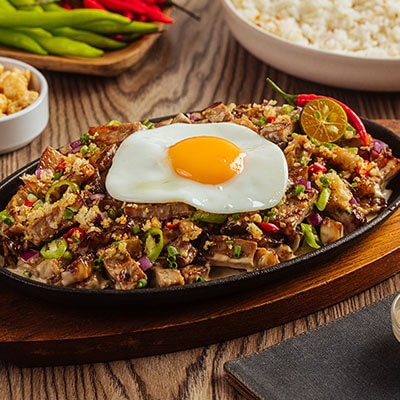
Excellent cooking starts at the chopping board. Strong knife skills influence how evenly your ingredients cook and how refined your dishes look on the plate. Inconsistent cuts affect texture, cooking time, and portion control. They also disrupt workflow during prep. But when you apply proper technique, you correct these issues early and build a more reliable foundation for consistent results.
How to Hold a Knife Properly
Precision begins with the way you hold your blade. Proper grip, correct guide-hand positioning, and stable posture work together to give you full control over every movement. Master these fundamentals first, and every cutting technique becomes easier to execute.
The pinch grip
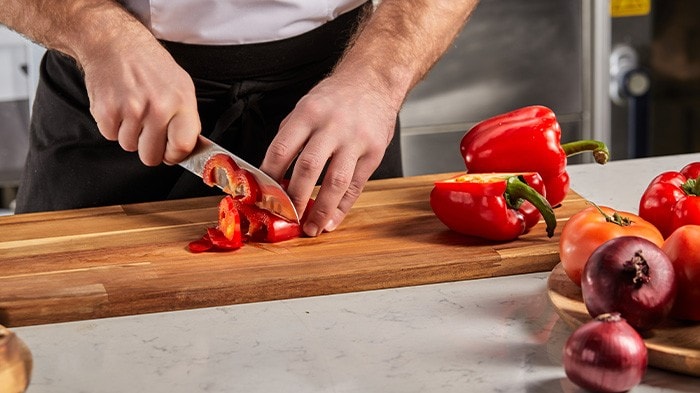
The pinch grip is the standard hold used in professional kitchens because it offers the most control over the blade.
● Grip the handle with your middle, ring, and pinky fingers.
● Place your thumb and index finger on opposite sides of the blade, just above the handle.
● Keep your wrist relaxed and aligned with your forearm.
By shifting control closer to the blade, you gain better accuracy when slicing, dicing, or mincing. This grip also reduces unnecessary movement and strengthens your overall knife cutting skills.
The claw grip (guide hand position)
Your guide hand protects your fingers while directing the knife.
● Curl your fingertips inward so your knuckles face the blade.
● Keep your thumb tucked safely behind your fingers.
● Let the blade rest lightly against your knuckles as you cut.
This position shields your fingertips and helps maintain consistent sizing. Your knuckles act as a natural guide, keeping each stroke steady.
Posture and stability
How you stand also affects how you cut. Here’s how to maintain proper posture:
● Stand with your feet shoulder-width apart for balance.
● Place a damp towel under your cutting board to prevent slipping.
● Keep your board at a height that allows your shoulders to stay relaxed.
A stable stance improves control and reduces fatigue during longer prep sessions.
Basic Knife Cuts and Their Uses
Basic knife cuts influence cooking time and affect how evenly a dish comes together. When you apply the right cutting techniques, prep becomes more predictable.
1. Slice
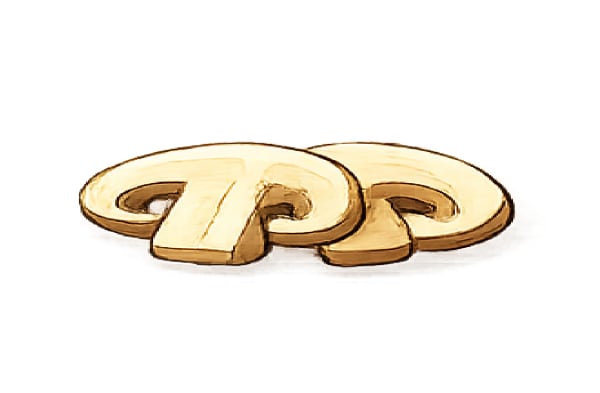
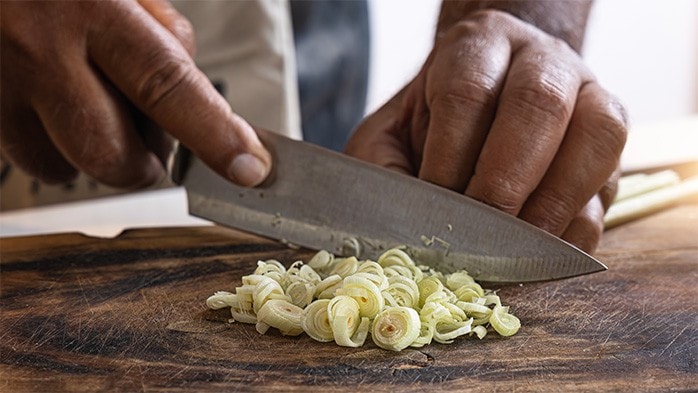
Slicing creates thin, even pieces by moving the blade forward in a smooth motion. Use this technique for proteins, fruits, and vegetables where clean edges matter. Avoid pressing straight down as this crushes delicate ingredients.
2. Chop
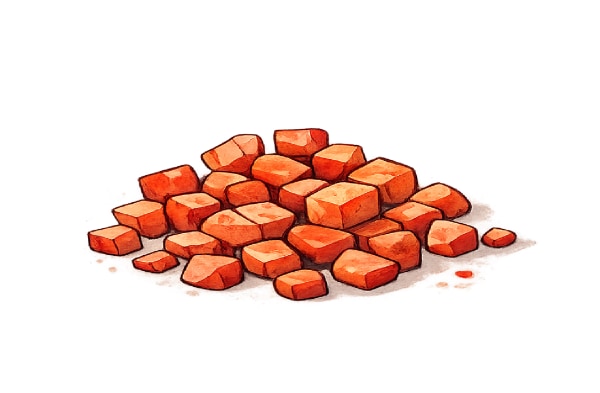
Chopping produces larger, irregular pieces. This method works well for rustic preparations like in soups or stews where exact uniformity is not required.
3. Dice
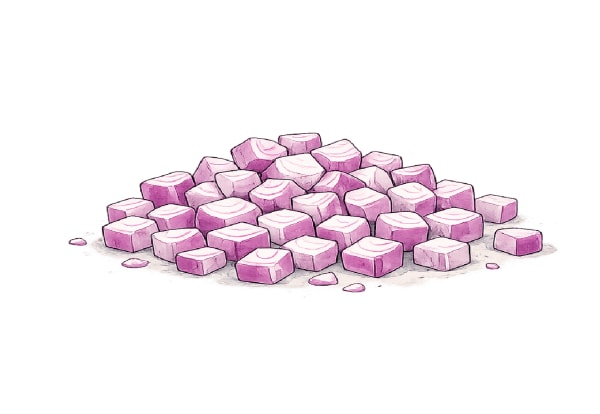
Dicing creates uniform cubes. The size determines cooking speed and final texture.
● Large dice: about 2 cm
● Medium dice: about 1 cm
● Small dice: about 0.5 cm
Even cubes promote consistent heat distribution and portion control.
4. Brunoise
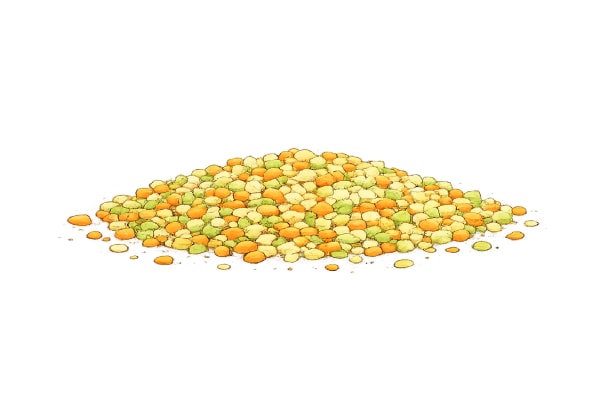
Brunoise is a fine dice measuring approximately 3 mm. It is commonly used for garnishes or dishes where subtle texture matters.
5. Julienne
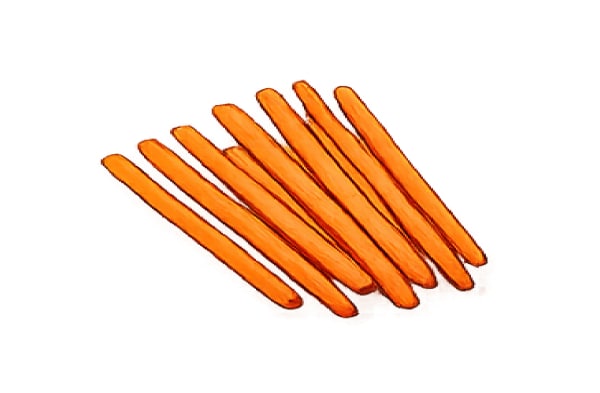
Julienne produces thin matchstick strips around 3 mm thick and 4 to 5 cm long. This cut is ideal for vegetables used in stir-fries, salads, and garnishes.
6. Batonnet
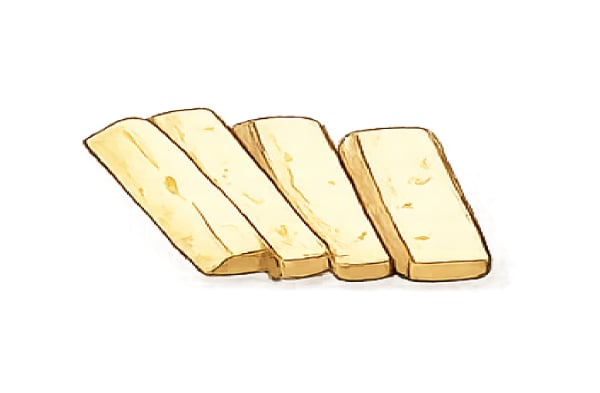
Batonnet creates thicker matchsticks, typically 6 mm wide. It often serves as the base cut before medium dicing.
7. Chiffonade
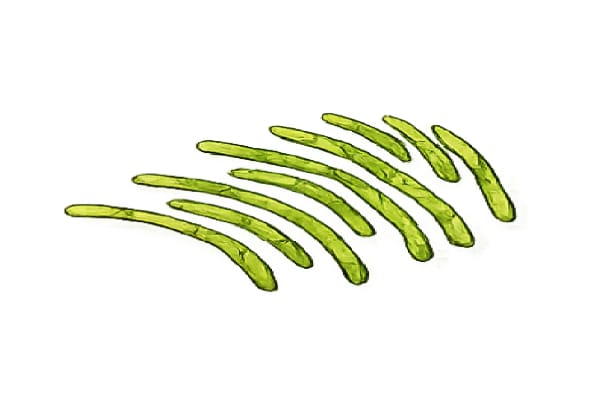
Chiffonade is used for leafy greens and herbs. Stack the leaves, roll them tightly, and slice into thin ribbons.
8. Mince
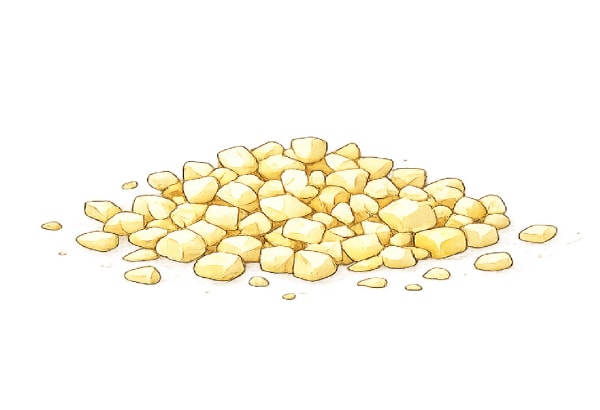
Mincing reduces ingredients such as garlic or herbs into very fine pieces. Use controlled rocking motions to achieve an even texture without crushing.
9. Rondelle
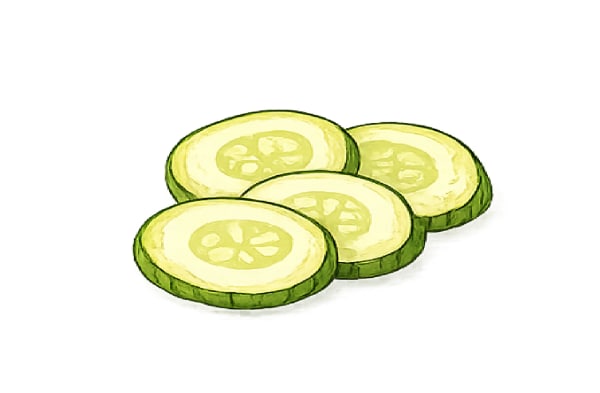
Rondelle produces round slices from cylindrical vegetables like carrots or cucumbers. Thickness depends on the intended dish.
10. Bias cut
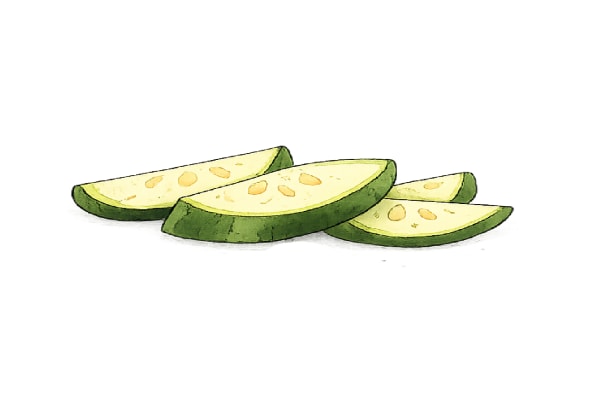
The bias cut slices ingredients diagonally. This increases surface area and improves visual appeal, especially in Asian preparations.
11. Oblique (roll cut)
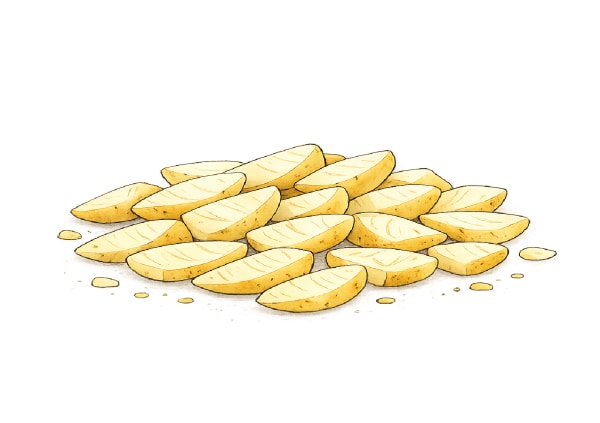
The oblique cut is made by rolling the vegetable slightly after each diagonal slice. This creates angled pieces with varied surfaces that cook evenly while adding dimension.
12. Wedges
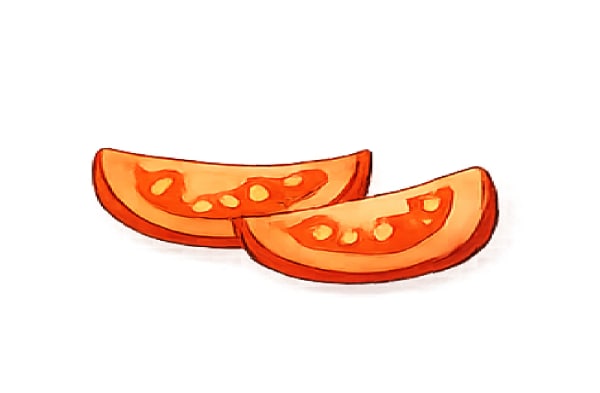
Wedges divide round ingredients into uniform sections. Keep sizes consistent to ensure even cooking.
13. Paysanne
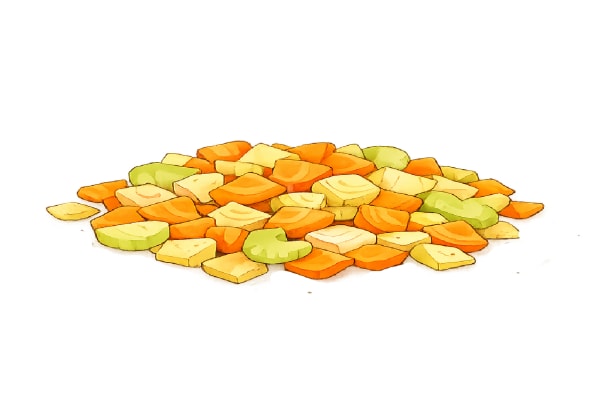
Paysanne produces thin, flat shapes such as squares or circles. This cut is often used for soups and quick-cooking dishes.
Tips for Improving Knife Skills
Mastering knife cuts takes repetition and discipline. Practice these cutting tips to strengthen control and improve consistency during prep:
● Practice with firm vegetables such as potatoes or carrots to build steadiness in your strokes.
● Prioritize uniform sizing before working on speed.
● Keep your blade sharp to reduce force and maintain control.
● Clean and dry knives immediately after use to preserve performance.
● Revisit your grip and posture regularly to prevent strain and maintain accuracy.
Basic Knives and Their Uses
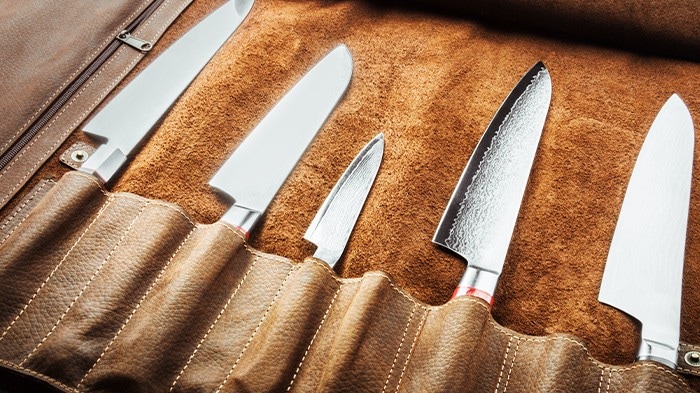
Strong knife skills require the right tool. Each knife has a specific purpose, and using it properly improves control while minimizing waste.
Chef’s knife
The chef’s knife, typically measuring 8 to 10 inches, is the primary workhorse in most kitchens. Its curved blade supports a smooth rocking motion for chopping and mincing, while its length allows clean slicing through larger ingredients.
Paring knife
A paring knife is small and lightweight, making it ideal for detailed tasks. Use it for peeling, trimming, and shaping fruits or small vegetables. Its compact size gives you close control when larger blades feel excessive.
Utility knife
The utility knife sits between a chef’s knife and a paring knife in size. Use it for medium-sized tasks that need more control than a chef’s knife and more coverage than a paring knife.
Boning knife
A boning knife features a narrow blade designed to separate meat from bone with accuracy. Its slim profile allows you to cut closely around joints while minimizing waste.
Slicing knife
A slicing knife has a longer, narrower blade designed for carving cooked meats. It produces clean, even slices without tearing fibers, making it ideal for roasts and larger proteins.
Bread knife
The bread knife has a serrated edge that grips crusty exteriors while protecting soft interiors. It works well for bread, cakes, and delicate items that a straight blade can flatten or tear.
Cleaver
A cleaver features a broad, heavy blade built for cutting through bones and dense ingredients. The Chinese cleaver, which is thinner and lighter, functions as a versatile tool for slicing and chopping vegetables.
Honing steel
A honing steel does not sharpen a blade but realigns its edge. Regular honing maintains cutting efficiency between sharpening sessions and helps preserve blade performance.
Knife Safety Essentials
Safe knife handling protects everyone in the kitchen. Follow these fundamental practices to reduce risk during prep:
● Always cut away from your body.
● Never attempt to catch a falling blade.
● Pass tools handle-first.
● Store knives properly in a block, sheath, or magnetic strip.
● Keep knife edges sharp to prevent slipping.
● Avoid using blades for prying or non-food tasks.
● Seek immediate first aid for any injury.
Knife skills set the standard for discipline in the kitchen. Precision at the chopping board translates into stronger execution across your menu. Invest in sharpening these skills and build a kitchen that performs with confidence every day.