Increasing restaurant sales does not always mean bringing in more customers. Sometimes, the fastest win is improving what already happens at the dining table: the order. Upselling and cross-selling can raise an average check size while making guests feel they are getting better value for their spend.
Read on to understand the difference between the two sales techniques and how to train your staff to recommend upgrades and pairings with confidence. Plus, get practical tips to increase order value without making guests feel pressured.
What Is Upselling in a Restaurant Setting?
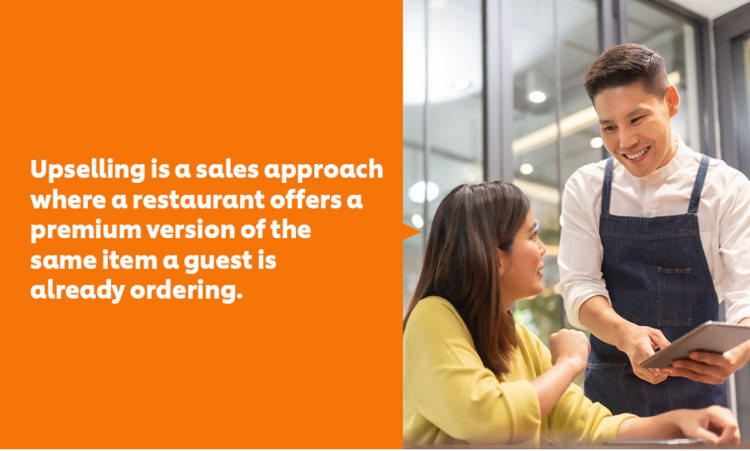
Upselling is a sales approach where a restaurant encourages a guest to choose a higher-value version of the same item they already intend to order. The upgrade typically costs slightly more, but it stays aligned with the original choice and does not introduce a separate dish.
Upselling does not require creating a new item on the menu. It happens at the point of ordering, when staff guide guests toward an enhanced version that already exists, whether it is a better protein, a more intricate preparation, or a more indulgent finish.
If the upsell, or upsale meaning, feels vague, think of it as a smart upgrade offered in the moment. To gain acceptance, the upgrade needs to feel clearly better than the standard option and reasonably priced. When done well, upselling improves the dining experience while contributing to higher revenue per order.
Upsell examples for a Filipino menu
These examples assume the guest has already chosen the dish, and the staff offers a better version during ordering. The dish itself does not change, only its quality or composition.
- Sisig: classic pork sisig upgraded with a fried egg and mayonnaise
- Breaded fish fillet: cream dory upgraded to lapu-lapu or maya-maya fillet
- Steamed rice: plain white rice upgraded to a salted egg and shrimp fried rice
- Iced tea: standard iced tea upgraded to house-brewed tanglad and calamansi iced tea
- Halo-halo: regular halo-halo upgraded with ice cream scoops
Notice the pattern: the customer is still getting what they asked for – just elevated.
How to Upsale a Product Without Sounding Pushy
Worried that guests might feel annoyed when staff recommend upgrades? The solution is to focus the conversation on the guest’s experience, not the restaurant’s sales goal. Here are upselling tips that work in real Filipino dining situations.
1. Offer upgrades as “best enjoyed” recommendations.
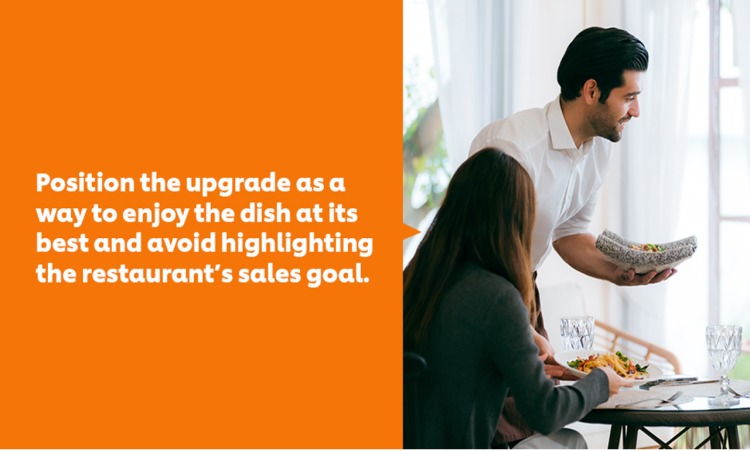
Guests accept upsells more easily when they sound like guidance rather than a pitch. Position the upgrade as a way to enjoy the dish at its best.
- “If you like your sisig richer, you may add an egg on top.”
- “For halo-halo, most guests add a scoop of ice cream because it brings out more ube flavor.”
2. Give two choices instead of one pushy suggestion.
Instead of telling guests what to add, offer a simple choice. This keeps them in control while still guiding the upgrade.
- “For your fish fillet, would you like regular cream dory or lapu-lapu?”
- “We have two options for sisig: one classic and a special one with mayonnaise.”
3. Upsell using clear value cues like portion, texture, and ingredients.
Avoid vague words like “better” or “premium” alone. Explain why the upgrade adds value so guests understand what they are paying for.
- “Brown rice adds more fiber and makes the meal more filling.”
- “House-brewed calamansi iced tea has less sugar and tastes more refreshing.”
4. Build upgrades the kitchen can execute consistently.
Upsells should never slow service or create confusion. Choose upgrades that the kitchen can prepare smoothly, even during peak hours. Effective upgrade types include:
- Portion alterations, such as regular to large
- Cut upgrades, like breast to leg quarter or mixed cuts to pork belly
- Add-ons prepared in advance, such as eggs, extra sauce, or toppings
- Quick ingredient substitutions
5. Let menu design do the selling quietly.
A well-designed menu can upsell without requiring extra effort from staff.
- Place the premium version right beside the regular option
- Highlight tags like “House Special,” “Chef’s Pick,” or “Bestseller”
- Use short descriptions that focus on what guests get, not hype
What Is Cross-Selling in a Restaurant Setting?
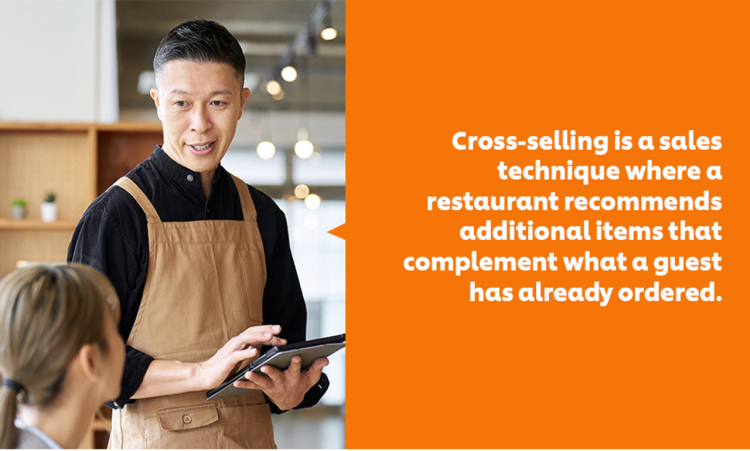
Cross-selling is a sales technique that restaurants use to grow order value. In practice, it means recommending additional items that complement what a guest has already ordered. While upselling upgrades the main item, cross-selling builds around it to create a complete meal.
The cross-selling meaning comes from offering items across the menu that support the main order rather than replace it. Instead of changing what the guest chose, cross-selling adds sides, drinks, or desserts that improve the dining experience.
Cross-sell examples for a Filipino menu
These suggestions usually come after a guest has chosen their dish, with the goal of completing the meal.
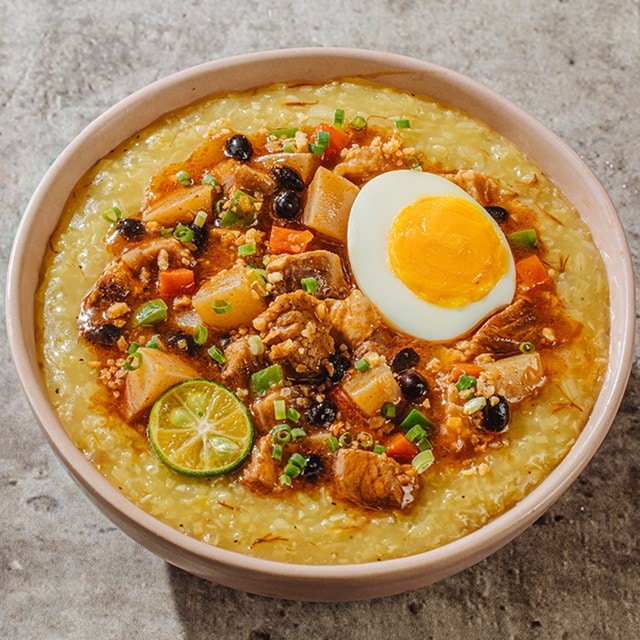
- Arroz caldo bundled with tokwa’t baboy and okoy
- Garlic butter pancit served alongside crispy sinigang wings
- Lechon kawali paired with ensaladang pako, ginisang monggo, and garlic fried rice
- Bulalo paired with crispy tawilis
- Salted egg bibingka served with puto bumbong and tsokolate or salabat
Cross-selling works when the add-on feels obvious and helpful to round out a meal.
Practical Cross-Selling Tips for Restaurants
Cross-selling works best when it comes across as genuine care for the guest’s meal, from creating balance to adding comfort and completeness. Here are practical ways to cross-sell in a restaurant setting.
1. Pair rich mains with bright sides.
Many Filipino dishes rely on rich sauces or deep-fried meats. An acidic side brings balance and cuts through heaviness, making the meal more enjoyable.
Pairing ideas:
- Lechon kawali + atcharang papaya
- Crispy pata + ensaladang mangga
- Bagnet + pickled onions
2. Pair spicy dishes with cooling beverages.
Spicy food drives drink orders, but guests often need guidance on what works best.
Pairing ideas:
- Bicol express + green mango juice
- Buffalo wings + cucumber lemonade
- Beef kaldereta + buko-lychee shake
3. Always pair ulams with satisfying carbs.
Most Filipino ulams do not stand alone. Guests expect rice, bread, or another carbohydrate to complete the meal. Cross-selling carbs feels natural because it aligns with how Filipinos eat every day.
Pairing ideas:
- Sisig + garlic rice + fried egg
- Pinoy fried chicken + kamote fries + banana ketchup
- Embutido + pandesal + Lady’s Choice Real Mayonnaise
4. Offer shareable sides that complete group orders.
Filipino dining often happens in groups. Cross-selling works well when it focuses on dishes that stretch the table and make sharing feel more satisfying.
Pairing ideas:
- Inihaw platter + steamed vegetables + salted egg + extra dipping sauces
- Lugaw + lechon kawali + fried tokwa + okoy
5. Make dessert pairings part of the experience, not an afterthought.
Dessert often gets skipped simply because no one brings it up. Pairing desserts with familiar drinks or comforting sides makes the decision easier and more appealing.
Pairing ideas:
- Biko + barako coffee
- Leche flan + sweetened macapuno
- Turon + vanilla ice cream
Cross Sell vs Upsell: Choosing the Right Approach for Your Sales
When thinking about cross sell vs upsell, use this simple rule:
- Upsell = an improved version of the same item (upgrade)
- Cross-sell = an additional item that complements the main order (pairing)
Use upselling when:
- Customers consider a higher-value version of the same item
- The kitchen can execute the upgrade quickly and consistently
- The difference is easy to explain, whether it’s the portion size, cut, ingredient quality, topping, or preparation style
Use cross-selling when:
- Customers order a main dish only and could benefit from sides, drinks, or dessert
- You want to build complete meal sets without relying on heavy discounts
- You aim to improve satisfaction by balancing flavors, textures, and temperatures
Benefits of Upselling and Cross-Selling for Food Businesses
The benefits of these sales techniques go beyond “more money per table.” When done right, they also support smoother operations and strengthen overall brand positioning.
1. Higher average check with the same traffic
Upselling and cross-selling allow businesses to grow sales without relying on more diners. This becomes especially important during off-peak hours and weekdays, when labor and rent stay fixed even as walk-ins slow down.
2. Better margin control
Restaurants can design upgrades and add-ons around items with strong profitability. By offering premium cuts, larger portions, or value-adding sides that cost only slightly more, the menu delivers higher perceived value while protecting margins.
3. More intentional use of inventory
When premium ingredients or sides are already in stock, upselling and cross-selling help move them with purpose. Instead of waiting for customers to order these items on their own, the menu guides demand.
4. Stronger brand perception
Thoughtful upgrades and well-matched pairings signal care and expertise. When recommendations feel relevant, guests see craftsmanship rather than price padding.
5. Clearer menu decisions for guests
Well-positioned upgrades and pairings help guests decide faster. Highlighting premium versions or recommended add-ons reduces hesitation and keeps ordering simple.
How to Train Staff to Upsell and Cross-Sell Confidently
Even the best sales strategy can fall flat if the team cannot explain it clearly or sounds unsure when making recommendations. Follow these practical guidelines to help staff upsell and cross-sell with confidence.
- Teach the difference clearly: upgrades versus pairings. Let staff taste the food so they can describe flavors and pairings with confidence.
- Provide three to five recommended lines per category. Equip staff with ready-to-use phrases for mains, drinks, and desserts. Also, train them to watch for verbal and physical cues that signal when a guest may be open to recommendations.
- Role-play common service scenarios. Practice upselling and cross-selling during rush hours, with indecisive guests, and with budget-conscious diners.
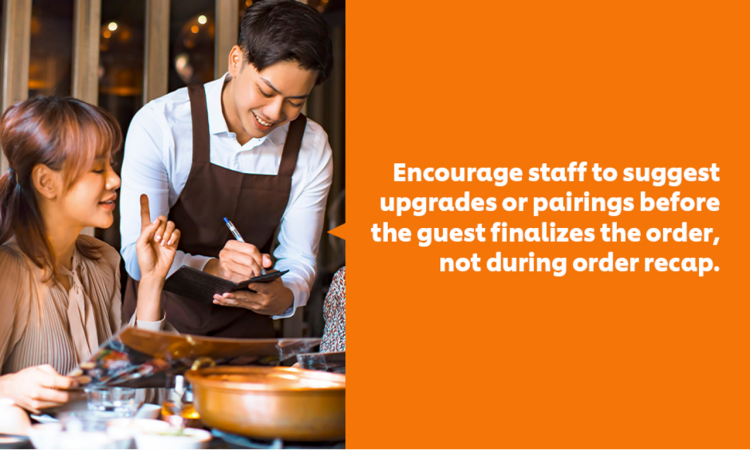
- Focus on timing and delivery. Encourage staff to suggest upgrades or pairings before the guest finalizes the order, not during order recap.
- Track what works and standardize it. Ask staff which lines and pairings get the most yeses.
- Avoid overwhelming the guest. Train staff to offer one strong suggestion at a time.
Upselling and cross-selling are not about pushing customers. Teams should feel comfortable knowing that not every recommendation will land, and that a “no” is part of the process. When suggestions feel tailored to what the guest ordered, they come across as genuine care, not a push to protect margins. Start training teams to recommend with intention, not pressure.